


Over 65% of Alibaba sourcing disputes originate from misclassified “General Cargo” quotes provided during initial factory negotiations. When sensitive items—such as battery-integrated electronics, cosmetics, magnetic assemblies, or trademarked merchandise—are tendered under standard freight manifests, cross-border supply chains face severe friction. Misdeclaration triggers immediate carrier rejections, reclassification penalties of +15% to +40%, and extended destination customs holds.

Navigating China’s export landscape requires a structured understanding of regulatory classifications, document verification protocols, and Total Landed Cost (TLC) metrics. This comprehensive manual breaks down the five core sensitive cargo categories, details specific regulatory exemptions, compares regional compliance mandates across the United States and the European Union, and provides an actionable decision framework for international procurement managers.
Decoding the 2026 Regulatory Spectrum: From General Cargo to Dangerous Goods
To optimize cross-border freight allocation, importers must distinguish between standard commercial goods, restricted sensitive items, and regulated hazardous materials:
- General Cargo: Non-restricted, inert consumer items (e.g., standard textiles, non-magnetic hardware, molded plastics) possessing zero physical, chemical, or magnetic hazard profiles. These items move freely through standard courier and commercial freight channels with baseline documentation.

- Sensitive Cargo (The Operational Grey Area): Products that do not qualify as fully dangerous goods under international maritime or aviation codes, but present operational risks or regulatory restrictions (e.g., lithium batteries, liquids, powders, magnets, branded goods). Logistics carriers do not outright prohibit sensitive goods, but they void standard transit insurance, mandate specialized handling codes, and require dedicated transportation corridors.

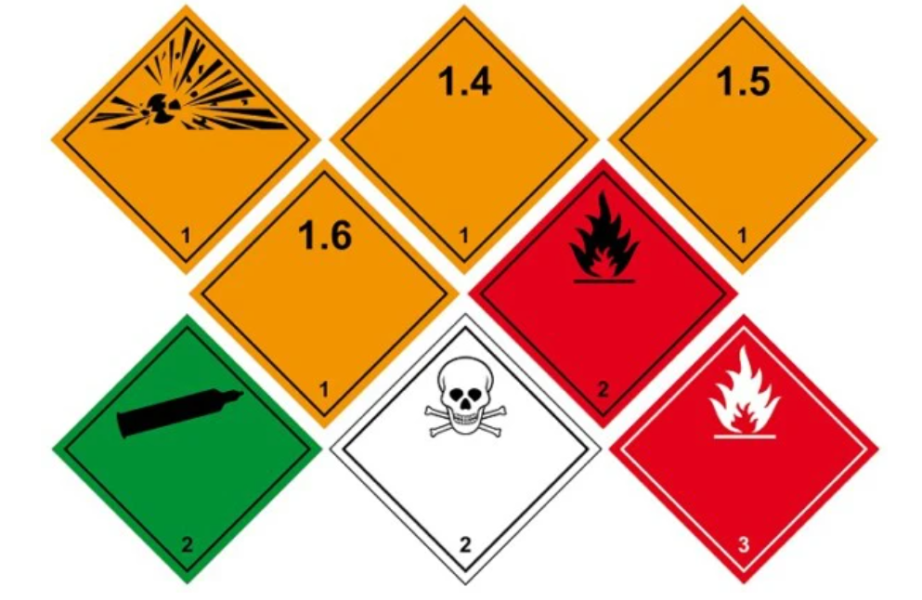
- Dangerous Goods (DG / Hazardous Materials): Substances or articles categorized under UN Hazard Classes 1 through 9 (e.g., raw chemical reagents, bulk flammable liquids, standalone industrial batteries). These goods are strictly banned from passenger air transport and require UN-certified outer packaging, certified DG handling personnel, and specialized freight operators.
If an Alibaba supplier declares sensitive cargo as general cargo to secure a low initial shipping quote, the freight forwarder’s origin warehouse automated X-ray scanning system will flag the anomaly. Upon reclassification, forwarders apply a minimum 3× surcharge over baseline general cargo rates, alongside warehouse re-processing fees ($150–$350 per consignment). Misdeclaration at destination customs can incur administrative penalties equal to 50% to 80% of total cargo FOB value, alongside complete inventory forfeiture.
The “Big 5” Sensitive Categories & The Document Matrix
Proper cargo handling relies on matching specific physical properties with mandatory compliance documentation and regulatory thresholds.
| Category | Primary Hazard / Restriction | Mandatory Documentation | Regulatory Exemption Threshold |
|---|---|---|---|
| 1. Power & Energy | Thermal runaway, short circuits | UN38.3 Test Summary, MSDS, 1.2m Drop Test Report | ≤2 cells & ≤20Wh per device (PI966 / PI967 Section II) |
| 2. Chemistry/Gels | Volumetric expansion, leakage | MSDS, Transport Condition Identification Report | Flash Point > 60°C (Non-DG sea); Non-toxic, non-corrosive liquids |
| 3. Magnetics | Navigation interference | Air Transport Demagnetization Inspection Report | Magnetic field strength < 0.159 A/m at 2.1m distance |
| 4. Consumables | Biosecurity, contamination | Phytosanitary Certificate, FDA Prior Notice, CIQ Quality Report | Fully processed non-animal dry herbs / botanical extracts |
| 5. IP & Branding | Trademark infringement | Official Brand Authorization Letter, Customs IPR Recordation | Unbranded OEM / White-label with distinct structural design |
Category 1: Power & Energy (Lithium Batteries)
- UN Codes: UN3480 (Lithium-ion batteries), UN3481 (Lithium-ion batteries contained in/packed with equipment), UN3171 (Battery-powered vehicles).
- Document Standard: Valid UN38.3 test summary report, Material Safety Data Sheet (MSDS), and a certified 1.2-meter drop test report.
- Exemption Threshold: Lithium metal cells with lithium content ≤ 1 g or lithium-ion cells with a Watt-hour rating ≤ 20 Wh (and battery packs ≤ 100 Wh) installed directly inside equipment can qualify for IATA Packing Instruction 967 Section II exemptions. Equipment containing no more than two installed cells or batteries can bypass stringent DG labeling and move via streamlined sensitive air lines.
Category 2: Liquids, Powders, Pastes & Gels
- Document Standard: 16-section MSDS and an official Transport Condition Identification Report issued by an accredited Chinese testing laboratory (e.g., Shanghai Institute of Chemical Industry).
- Critical Check (Flash Point): For liquid cargo, the flash point parameter determines transport eligibility. Liquids with a flash point > 60°C are classified as non-hazardous for maritime freight. Liquids with a flash point < 23°C are strictly categorized as Class 3 Dangerous Goods. Always verify Section 9 of the factory MSDS before executing purchase orders.
Category 3: Magnetized Materials
- Document Standard: Air Transport Demagnetization Inspection Report.
- Cut-Off Standard: Air freight regulations require testing magnetic field intensity. If the magnetic field strength measured at a distance of 2.1 meters from the cargo package is < 0.159 A/m (0.002 gauss), the shipment is completely exempt from magnetic restrictions and can be processed as General Cargo. Products exceeding 0.418 A/m at 4.6 meters require specialized magnetic shielding or are restricted to cargo aircraft.
Category 4: Consumables & Health Supplements
- Document Standard: Import permits, Phytosanitary Certificates, and destination health authority filings.
- US & EU Regulatory Branches:
- United States (CPSC & FDA): Consumables, topical cosmetics, and dietary supplements mandate FDA Prior Notice submission prior to port entry. Powders derived from animal origins undergo rigorous USDA biosecurity screening regarding Foot and Mouth Disease (FMD) risks.
- European Union (RoHS & REACH): Topical formulations and electronic health devices must provide REACH chemical compliance declarations and CE-RoHS heavy metal safety audits to clear border checkpoints.
Category 5: Branded & Trademarked Merchandise
- Document Standard: Official Trademark Authorization Letter issued by the brand holder, cross-referenced with Customs Intellectual Property Rights (IPR) databases.
- The “White Label” Loophole: Removing external logos from counterfeit or replica goods is ineffective. Customs automated image recognition algorithms analyze physical product geometry and design patents. Non-authorized patented shapes face immediate border seizure under anti-piracy laws.
The “Sourcing Trap” Deep Dive: Unpacking Total Landed Cost (TLC)

Relying on initial factory EXW or FOB quotes often obscures total transportation expenses. When suppliers lack compliance documentation, importers absorb unexpected supply chain costs.
TLC = Factory EXW Price + Base Freight Rate + Sensitive Line Handling Surcharge + Documentation Processing Fees + Import Duties/VAT + Risk Contingency
Financial Impact Analysis: Scenario A vs. Scenario B
Scenario A: Missing UN38.3 Battery Certification An importer purchases 1,000 units of battery-operated smart home devices under EXW terms ($15,000 cargo value). The supplier provides an outdated MSDS but lacks a batch-specific UN38.3 test summary.
- Direct Consequences: Origin express couriers reject the cargo at the consolidation hub.
- Unplanned Financial Exposure:
- Emergency third-party lab testing in China: $450 – $800
- Origin warehouse storage ($25/day for 7 days): $175
- Air freight re-booking and administrative penalty: $350
- Total Financial Penalty: $975 – $1,325 (8.8% increase in total landed cargo cost, accompanied by a 10-day fulfillment delay).
Scenario B: Misdeclared Battery Items as General Toys An importer attempts to ship 500 kg of electronic toys containing internal lithium batteries without special line routing, declaring them as standard plastic toys.
- Direct Consequences: Customs AI algorithms flag the density profile during origin X-ray screening. Cargo is seized for misdeclaration.
- Unplanned Financial Exposure:
- Customs misdeclaration fine: $2,000 – $5,000
- Port demurrage and container hold fees ($200/day): $1,400 (7-day average hold)
- Mandatory return-to-factory domestic freight: $600
- Total Financial Penalty: $4,000 – $7,000+ (Destruction of commercial operating margins).
Step-by-Step Compliance Checklist for Importers
To ensure seamless logistics execution, integrate this structured compliance workflow into your procurement pipeline:
- Pre-PO Verification Stage
- Mandate that the Alibaba seller provide a valid, batch-specific MSDS and UN38.3 Test Summary before issuing the initial 30% deposit.
- Cross-check that the manufacturer name listed on the test certificates exactly matches the legal entity name on the commercial invoice.
- In-Production Quality Control Stage
- Verify battery structural safeguards: ensure internal cells feature over-discharge protection circuitry required by IATA standards.
- Require the factory to apply secondary containment, leak-proof absorbent lining for liquids, and insulating terminal tape for battery components.
- Pre-Shipment Audit (48 Hours Prior to Cargo Dispatch)
- Conduct an origin warehouse pre-inspection to confirm outer master carton markings. Ensure mandatory UN Hazard Labels or Cargo Aircraft Only (CAO) stickers are applied correctly.
- Verify that outer master cartons comply with 1.2-meter drop test structural requirements to prevent transit carton collapse.
Shipping Channel Selection Matrix
Selecting the appropriate logistics pipeline depends on cargo volume, urgency, document availability, and total risk tolerance.
| Operating Criteria | Standard Express (DHL/FedEx/UPS) | Dedicated DDP Sensitive Air Line | Ocean Freight LCL/FCL (Non-DG) |
|---|---|---|---|
| Cost Efficiency | Low (High volumetric rates) | Medium (Balanced all-inclusive) | Highest (Optimal for >500 kg) |
| Document Strictness | Extreme (Automated rejection) | Flexible (MSDS/In-house vetting) | Moderate to High |
| Transit Lead Time | 3 – 5 Business Days | 8 – 12 Business Days | 25 – 35 Business Days |
| Target Shipments | High-value small samples (<5 kg) | Mid-size e-commerce inventory | Bulk raw materials / heavy stock |
| Customs Hold Risk | High (If misdeclared) | Low (Pre-cleared DDP channels) | Low to Medium |
Technical Schema FAQ for Importers
Q: The Alibaba seller claims, “We ship this product as general cargo every month.” Should I proceed with their shipping quote?
A: Proceed with extreme caution. Suppliers often utilize unverified postal lines or “grey market” channels to ship small parcels. For commercial B2B shipments, cross-check the 10-digit HS Code. If the tariff description references internal energy cells, liquids, or magnetic components, border automated screening systems will flag the entry. Verbal seller assurances provide zero legal protection against customs holds; insist on reviewing certified transport identification documents before dispatching cargo.
Q: Are specialized DDP (Delivered Duty Paid) sensitive cargo lines more expensive than standard freight options?
A: While the baseline freight rate per kilogram is 15% to 30% higher for sensitive DDP lines, the Total Landed Cost is frequently lower for mid-tier shipments. DDP sensitive corridors consolidate customs clearance, absorb specialized handling surcharges, and eliminate origin testing overhead and destination broker fees. Calculating landed cost across the entire logistics chain demonstrates that DDP sensitive options provide superior cost stability and risk control.
Conclusion & Strategic Supply Chain Orchestration
Don’t rely on a supplier’s verbal promise to ship goods as “general cargo”; instead, base your decisions on HS codes and certificates. Treat compliance documentation as a negotiating point just as critical as price—otherwise, any savings on shipping costs will be lost at customs, with interest.