



Outsourcing your order fulfillment to our team in China means you stop worrying about warehouse management, packing labor, and cross-border logistics headaches. As a fulfillment partner deeply rooted in China’s supply chain, we receive and store your inventory, then pick, pack, and ship every customer order on your behalf.
For sellers sourcing from Alibaba or local factories, this is the shortest path from production line to shipped orders—no need to lease overseas storage, no need to hire your own packing staff, and no need to shop around for shipping rates on every single shipment. We handle the heavy lifting from warehouse to worldwide delivery, so you can focus entirely on growing your sales. The rest? That’s what we’re here for.

This guide covers what the model actually involves, why sellers move fulfillment to China, what it costs, how it compares with an overseas 3PL, and how to vet a partner without overcommitting. Treat it as the hub for the topic; the deeper dives on how pick and pack works, China pricing, the China vs overseas trade-off, and choosing a provider sit in the cluster around it.
What outsourcing pick and pack to China actually means
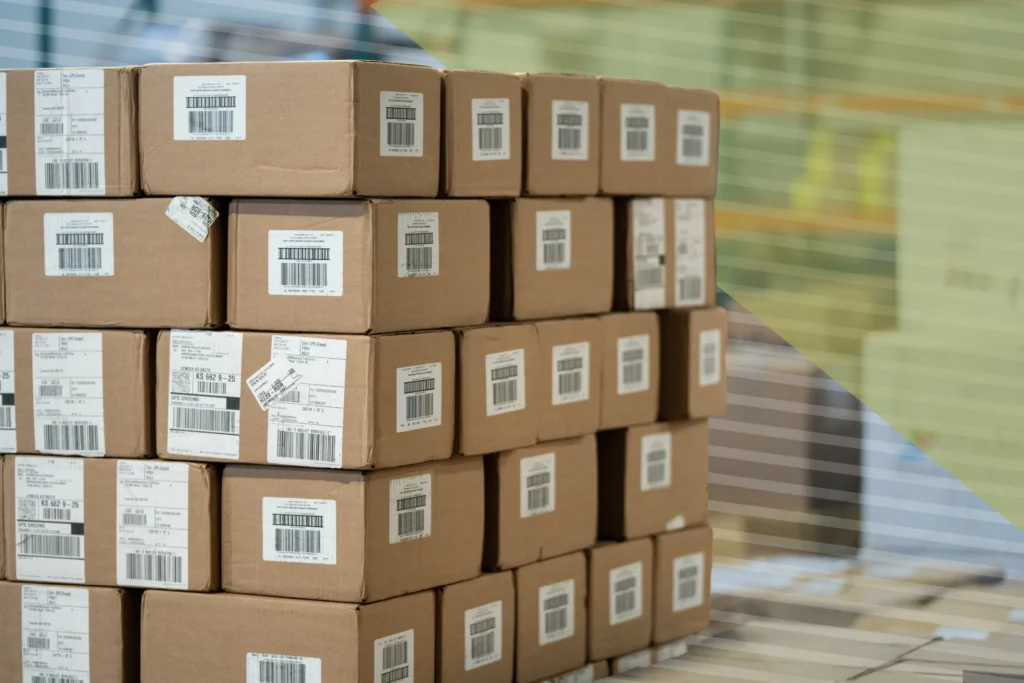
When you work with us, the process is straightforward: you send your inventory to our warehouse in China. When a customer places an order, our team locates the items, packs them securely with the correct documentation, and hands the parcel off to our carrier partners. You get a tracking number to share with your customer—and that’s the entire dispatch process, handled by us, typically for a per-order fee plus storage.
The real advantage isn’t just saving you from manual labor. It’s that our warehouse sits right where your goods are made. That means restocks and inventory corrections happen in hours, not weeks across an ocean. When something goes wrong, we fix it fast—because we’re local to your supply chain.
How it works in practice
You connect your store to our fulfillment platform, and orders start flowing in automatically. Tracking numbers flow back out the same way. No emailing spreadsheets, no back-and-forth confirmations. Our system takes the order, we fulfill it, and your customer sees the same tracking experience they’d expect from any local operation. We become a seamless extension of your back office—just one that happens to be in China.
How this differs from consolidation and repacking
These terms get mixed up all the time, so let me spell out the difference clearly:
- Consolidation merges multiple supplier shipments into one box sent to you.
- Repacking re-boxes goods to reduce volumetric weight before shipping.
- Pick and pack is something else entirely: it takes stock already sitting in our warehouse and ships individual orders directly to your customers.
Think of it this way—consolidation fills the warehouse; pick and pack empties it, one order at a time. They’re consecutive steps in the same pipeline, not competing services. And we handle every step along the way.
Why sellers move fulfillment to China
Proximity to your manufacturers
If you source from Alibaba or a Guangzhou or Shenzhen factory, your goods are already in the region. Shipping them to a US or EU warehouse first just adds a leg, a customs event, and a handling charge. Storing them in China means inventory lands a short domestic hop from the factory, and restocks are measured in days, not weeks. When a best-seller runs low, the replacement is already in the same country as the warehouse that ships it.

Storage and labor economics
Warehouse space and pick labor cost less in China than in most Western markets. For high-SKU or bulky goods, that gap is often the difference between a fulfillment line that bleeds money and one that is quietly profitable. See our breakdown of pick and pack costs in China for the real fee stack. The saving is not only headline rent. Labor for picking, quality checks, and repacking is also cheaper, so the whole handling chain costs less per unit. The catch is that cheap space tempts you to over-store; discipline on slow SKUs keeps the win real rather than papering over dead inventory.
Faster restocks for Alibaba-sourced stock
Buyers who purchase through Alibaba can top up a China warehouse quickly between production runs. You keep a buffer of best-sellers local to the factory and avoid the whiplash of overseas reorder lead times. That buffer is what lets you promise fast dispatch without holding stock on three continents.
The pick and pack process, step by step
Inbound receiving and storage
Your supplier delivers cartons to the warehouse. Staff check quantities, label or barcode each SKU, and slot it into racking. Good operators photograph the inbound and update a dashboard so you can see stock levels in real time. You should be able to open a browser and see exactly how many units of each SKU are on the shelf, where they are, and when they arrived – that visibility is the foundation everything else sits on.
Pick, pack, and dispatch
An order hits the system. A picker walks (or a system directs) to the locations, grabs the right items, and a packer chooses packaging that protects the goods without wasting space. The parcel is weighed, labeled, and handed to the carrier. Tracking flows back to your store automatically if the software is connected. Good operators add a weigh-check or scan-verify so the packed weight matches the order – a small step that catches a missing item before the box leaves. That verification is a big part of why accuracy SLAs matter when you choose a provider. A warehouse that cannot tell you what left the building is a warehouse you will outgrow fast.
Returns and exception handling
Not every parcel lands cleanly. A warehouse worth using has a defined path for refused deliveries, wrong-address returns, and damaged-in-transit cases, even if cross-border returns are awkward. Ask how they log exceptions and whether you get alerted, because the alternative is finding out from an angry customer that a batch went missing. Exception handling is where cheap operations quietly fall apart.
Who this model fits – and who it doesn’t
A strong fit if
You source in China, sell steady volume rather than one-off spikes, ship to multiple countries, or want to stop doing fulfillment yourself. It also suits sellers with several SKUs who would otherwise tie up cash in a distant warehouse, and brands that already use a China shipping agent for inbound and simply want the downstream half automated too.
Think twice if
Your inventory already sits near your buyers and next-day delivery is your whole pitch. Cross-border transit from China adds days and makes returns more awkward. In that case a local 3PL, or a hybrid, may serve you better – more on that in our China vs overseas 3PL comparison. If your promise to customers is next-day arrival, a warehouse on the far side of a customs border is working against you.
What it costs (and the fees people forget)
The standard fee stack
Expect monthly storage, an inbound or receiving fee, a per-order pick fee, packing materials, and outbound freight. Many providers also charge a flat account or minimum monthly fee. None of this is hidden in principle, but it is easy to model only the pick fee and forget the rest. The pick fee is the most visible number and usually the smallest part of the total once freight and storage are in.
Charges that surprise first-timers
Returns handling, oversized-item surcharges, barcode labeling, and the monthly minimum are the usual gotchas. We lay out each line in the cost guide. The monthly minimum is the one that bites: you pay it whether or not you ship, so a slow month still costs you the floor.
China or an overseas 3PL?
There is no universal answer. China wins on handling cost and supply proximity; an overseas 3PL wins on last-mile speed and easy returns. Read the side-by-side comparison before committing, and remember a split inventory is a legitimate middle path. Plenty of sellers keep fast-movers in a local 3PL for speed and bulk in China for cost, then let software decide which stock fulfills each order. The either-or framing is a beginner mistake; the real question is the ratio.
Vetting a China pick and pack partner
Treat provider selection like hiring a teammate. Check licenses and insurance, demand a real warehouse management system (WMS) with store integrations, pin down accuracy SLAs, and read the contract for minimums and exit terms. Our provider vetting checklist walks the exact questions to ask. Also useful: how to vet a China freight forwarder and what a modern Guangzhou warehouse offers. The cheapest quote is rarely the cheapest outcome once accuracy and communication are priced in.
Getting started without overcommitting
Run a trial batch first
Before moving your whole catalog, send one or two SKUs and route a few dozen real orders through the warehouse. You learn their accuracy, packing quality, and communication speed with limited risk, and you get a live feel for the dashboard your customers will eventually see. A trial turns a sales pitch into evidence. If something is wrong, you have lost a carton of stock, not your entire inventory and a quarter of goodwill.
Keep some stock flexible
Do not lock every unit into a long storage term on day one. Start with the items you sell consistently and hold new or seasonal products back until demand is proven. Flexibility costs a little in repeat shipping but protects you from paying to store dead stock – the silent drain that undermines the cheap-rent advantage. A unit that does not sell is a recurring bill dressed up as inventory.
Where pick and pack fits your logistics stack
Upstream: sourcing and consolidation
Pick and pack assumes inventory is already in the warehouse. Getting it there is the job of consolidation and a shipping agent who gather supplier goods into one inbound flow. Treat fulfillment as the downstream half of one pipeline, not a separate project. The warehouse and your agent should be comparing notes, not operating as strangers.
Downstream: freight and last mile
Once packed, parcels leave via the same shipping routes you already use, and right-sized packing keeps those rates down. The warehouse and the carrier are partners in the same dispatch, so negotiate them together rather than separately. A warehouse that ships volume with your carrier can often get a rate you cannot get alone.
Pitfalls that quietly erase the savings
Over-storing slow SKUs
The cheap rent only stays cheap if the stock moves. Every unit sitting past its sell-by date is a recurring storage charge with no offsetting order. Review slow movers monthly and relocate or liquidate them rather than letting paid racking fill with dead weight. Storage is the cost that scales with indecision.
Ignoring the returns path until it hurts
Cross-border returns are where China fulfillment bites. Agree a returns address and process before launch, not after your first unhappy customer overseas. A clear returns workflow protects the unit savings from evaporating in refunds and support time. The saving on fulfillment is real; the cost of a returns mess is what cancels it.
Frequently asked questions
What does pick and pack to China mean?
It means hiring a Chinese warehouse or 3PL to store your inventory and fulfill each customer order – picking the items, packing them, and shipping them out – instead of you doing it yourself or using a warehouse near your customers.
Is pick and pack the same as order consolidation?
No. Consolidation merges several supplier shipments into one box sent to you. Pick and pack takes inventory already stored in the warehouse and ships individual orders to your customers. They solve different steps of the chain.
How much does pick and pack in China cost?
Typical stacks include monthly storage, an inbound or receiving fee, a per-order pick fee, packing materials, and outbound freight. Many providers also charge account or minimum monthly fees. See our cost breakdown for the specifics.
Should I use a China 3PL or one in my own country?
Use China when your goods are sourced there and you want lower handling and storage costs plus tight restock loops. Use an overseas 3PL when speed-to-door and easy local returns matter more than unit savings.
Do I need a lot of inventory to make this worthwhile?
Not necessarily, but fixed account and minimum fees mean it pays off more reliably once you have steady monthly order volume rather than occasional spikes.