



What a China fulfillment center does day to day
A China fulfillment center is where your Alibaba inventory is stored and turned into shipped orders. Unlike a pure freight forwarder that moves goods from A to B, a fulfillment center holds stock and processes individual orders against it. The daily cycle is receiving, putaway, picking, packing, and outbound — repeated for every order that comes in.
The point of locating this operation in China is that your goods are already there, next to the factories that make them. Instead of shipping a full container to an overseas warehouse and hoping demand appears, you keep stock in China and let orders pull it out one at a time.
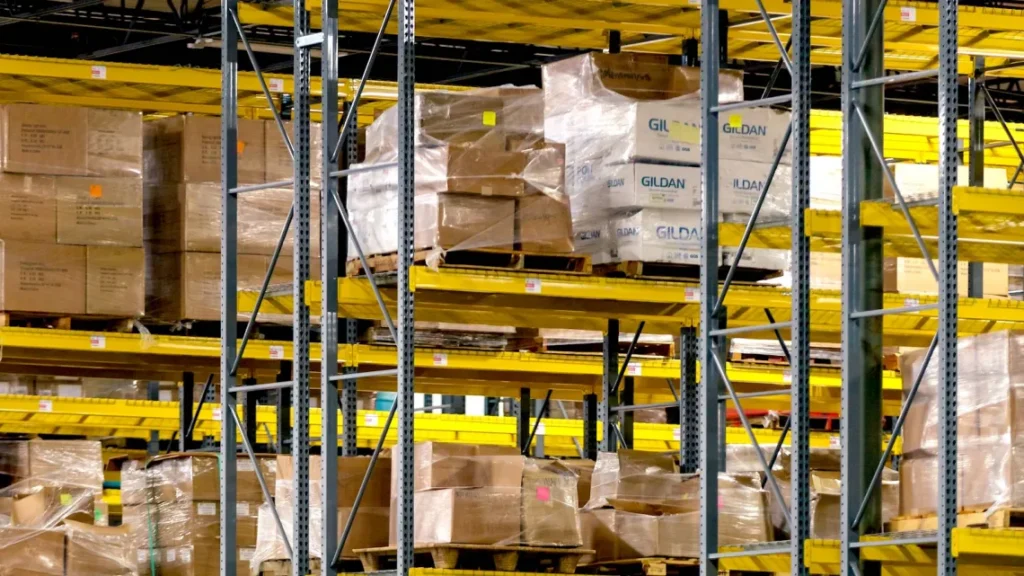
Receiving and putaway
Goods arrive from your supplier in cartons or on pallets. At receiving, the warehouse checks the quantity against the delivery note, does a basic quality check, and labels each unit or carton with a bin location in the warehouse management system.
Why the inbound check matters
Catching a short shipment or a damaged carton at receiving — while the supplier is still accountable — saves a far bigger problem later when a customer order cannot be fulfilled. The inspection is light, not a full QC, but it confirms the physical goods match the paperwork before they go onto the shelf.
Bin locations and putaway
Each SKU is assigned a bin location so pickers know exactly where to go. Good putaway groups fast-moving items near the packing station and slow movers further out. This is the unglamorous part of fulfillment that decides how fast an order can be turned around.
Pick lines, packing, and outbound
When an order lands, the system generates a pick list. A picker walks or scans through the bins, collects the items, and brings them to a packing station.
Pick methods you will see
Small operations use paper or scanner picks; larger ones use batch picking (several orders at once) or pick-to-light. The method scales with order volume, and the right one keeps error rates down as you grow. The warehouse should be able to tell you which method applies at your volume.
Packing and the outbound leg
At packing, items are boxed with the right fill, labeled, and handed to the outbound carrier. This is also where DDP shipping from China can be applied — the parcel leaves the center already cleared and duty paid, so it arrives at the customer clean.
WMS, bin locations, and the ops behind fast turnaround
The warehouse management system (WMS) is the brain. It tracks every unit by bin location, tells pickers the shortest route, and updates stock the moment an order ships. Without a WMS, a center is just storage; with one, it can promise same-day pick cutoffs and accurate stock counts.
For a seller, the practical question is whether the center’s WMS integrates with your store. If orders flow in automatically and stock updates in real time, you avoid overselling and manual re-keying. That integration, more than the building itself, is what separates a fulfillment center from a basic warehouse.
Why locating fulfillment next to your suppliers cuts lead time
The biggest hidden delay in cross-border selling is the gap between “supplier finished production” and “goods available to ship to customers”. If fulfillment sits in the same city as your Alibaba suppliers, that gap shrinks to a local truck ride instead of an ocean crossing.
This also helps with order consolidation: multiple suppliers’ goods can be gathered at the center, inspected together, and stored as one pooled inventory — so a customer order pulling from three factories still ships as a single parcel.
Worked example: a 500-unit SKU at a Shenzhen center
As an illustration, take a 500-unit SKU stored and picked at a Shenzhen fulfillment center over a month. The arithmetic, not a fixed quote:
- Storage: a monthly fee per bin or per pallet position occupied, so cost scales with how much you keep, not a flat rent.
- Picking and packing: a per-order pick fee plus a per-parcel pack and material fee, charged only when orders actually ship.
- Outbound: the carrier rate from Shenzhen to the destination, which is lower per unit than shipping the same goods in from overseas because you are not paying to move dead stock first.
- Versus an overseas 3PL: the overseas option avoids China-to-overseas freight per order but adds a full container of pre-positioned inventory and longer supplier-to-shelf lead time. The China center wins on working capital and responsiveness for long-tail SKUs.
The all-in monthly cost is storage plus pick/pack plus outbound, and it only grows when you actually sell. That variable model is the main reason sellers keep fulfillment in China rather than pre-shipping everything abroad.

Documents and handling notes
To open a fulfillment center account you provide your SKU list with dimensions and weights, your supplier’s contact for inbound deliveries, and your store integration details. The center uses these to set bin locations and receive goods correctly. For a cost breakdown of the same operation, China pick and pack costs walks through the fee stack, and China vs overseas 3PL compares the trade-offs directly.